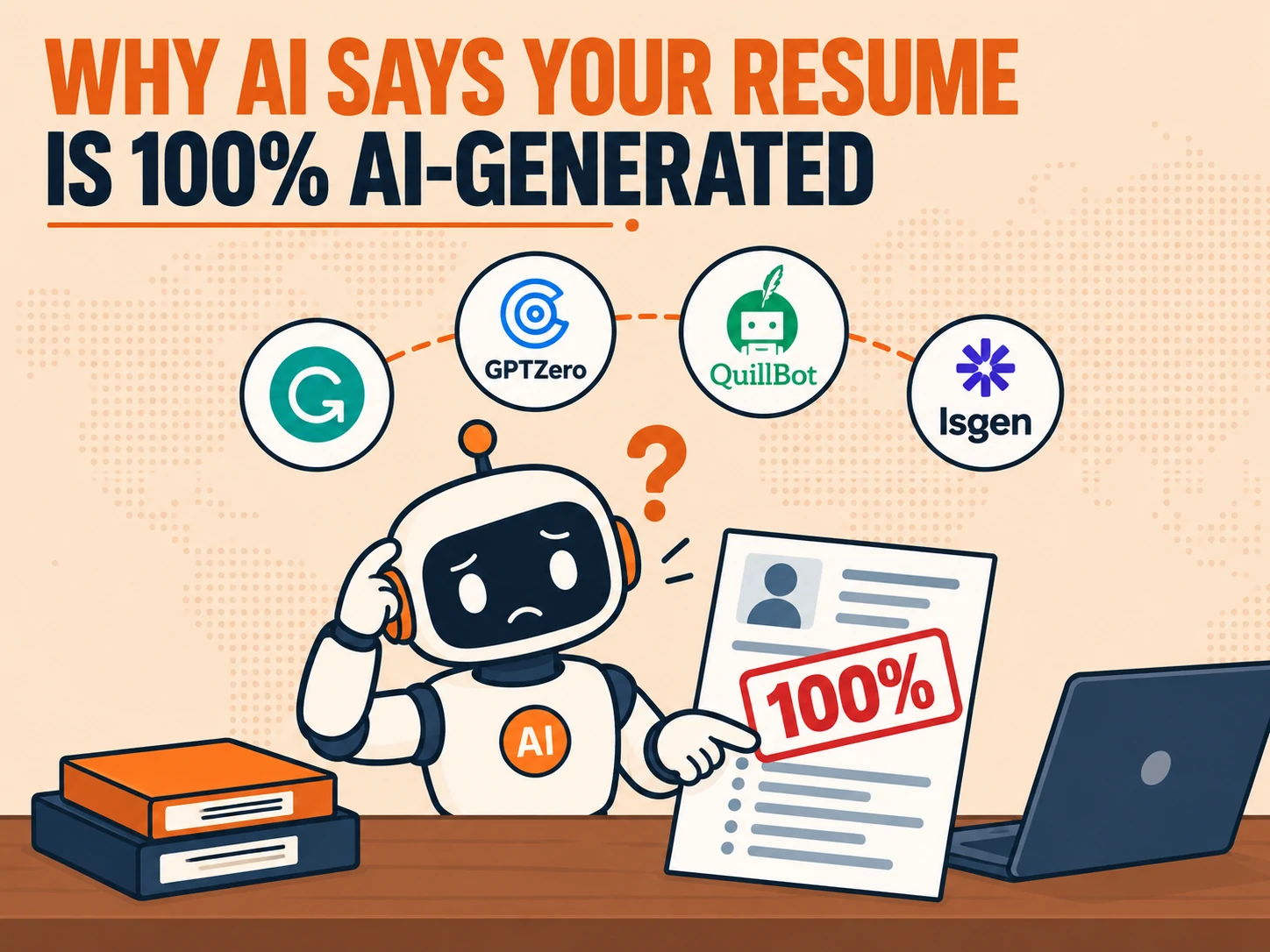
AIAI detectors flag formulaic, well-structured writing as machine-generated because they measure predictability, not truth, and resumes are written to be predictable on purpose. That’s also why the same detectors have flagged the Declaration of Independence as 98.51% AI-generated, a document written in 1776. If your resume came back flagged, it likely means your writing is clean and structured, not that you used AI.
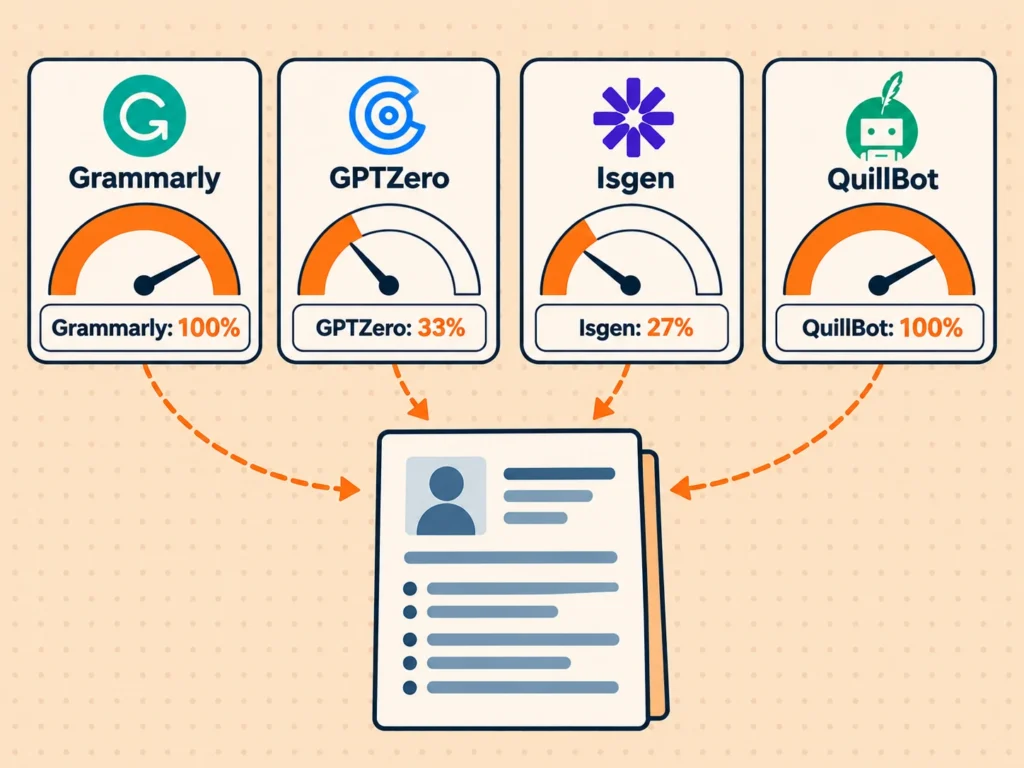
One Reddit user ran their own resume, one they’d been editing for years, through four different detectors and got wildly inconsistent verdicts: Grammarly and QuillBot both said 100% AI, GPTZero said 33% AI, and Isgen said 27% AI. Same document, four tools, no agreement. That’s not a fluke, it’s the norm.
Why This Actually Happens
Detectors work by measuring how predictable a piece of text is, a property researchers call perplexity. AI-generated text tends to be smoother and more statistically predictable than typical human writing, so low perplexity gets treated as a signal of AI authorship. The problem is that a lot of human writing is also deliberately predictable and formulaic, and a resume is one of the most formulaic documents most people ever write. Short, clean bullet points. Standard section headers. Industry keywords repeated to satisfy an applicant tracking system. That’s exactly the kind of text pattern a detector is built to flag, whether a person or a model wrote it.
The Tools Don’t Even Agree With Each Other
That inconsistency shows up constantly outside of resumes too. A 2023 study found that seven major AI detectors falsely flagged non-native English writing at a much higher rate than native writing on academic essays specifically, since simpler sentence structure and standard syntax read as “low perplexity” the same way a resume’s short bullet points do. The mechanism is the same even though that study wasn’t about resumes: anything written cleanly and simply is more likely to get flagged, regardless of who or what actually wrote it.
What Recruiters Are Actually Told to Do Instead
A global recruitment firm’s own published guidance is blunt about this: AI detection tools can provide additional signals, but they should not be treated as definitive proof that AI has or hasn’t been used, and results can be inconsistent. Instead of running resumes through a detector, the actual advice given to employers is to watch for specific, human-judged red flags:
- Generic phrases like “results-driven professional” or “proven track record of success”
- Vague achievements with no measurable specifics, like “improved operational efficiency” without a number attached
- Excessive keyword repetition pulled directly from the job posting
- Unnatural, over-formal wording, like “utilised competencies to facilitate revenue enhancement outcomes”
Notice that none of these require software. They’re the same kind of judgment a human reader already makes when something feels off, and that recruiters are explicitly told to rely on instead of a detector score.
The Double Bind Job Seekers Are Actually Stuck In
The frustrating part is that the advice to beat an applicant tracking system and the advice to avoid an AI-detection flag pull in opposite directions. ATS optimization pushes you toward exact keyword matches and clean, scannable formatting. AI detection flags exactly that kind of clean, formulaic structure as a warning sign. One frustrated commenter on that same Reddit thread put it plainly: AI can’t parse your resume, you’re out. AI can’t find keywords the way it wants, you’re out. AI detects your use of AI, you’re out.
What Actually Helps
- Avoid submitting a resume built entirely from an unedited template, start from a blank document and build the formatting yourself, even if you’re borrowing the visual layout.
- Write specific achievements in your own words rather than generic phrasing, a number and a real outcome reads as human because it usually is.
- Add small, personal details that a generic template wouldn’t include, the same advice Michael Page gives employers to look for is the advice that helps you pass their own screening.
- If you’re worried about a specific application, focus energy on the interview and a skills-based portfolio instead, several recruiters note that a real conversation settles the question a detector can’t.
A Word of Caution About “Humanizer” Tools
Some job seekers online have started running flagged resumes through AI “humanizer” tools specifically to lower a detector’s score. That’s worth being cautious about. It’s still an AI tool altering your writing, it can introduce awkward phrasing a human reader might notice on their own, and there’s no guarantee it lowers your score on the next detector a recruiter happens to use instead. Writing in your own authentic voice in the first place solves the actual problem instead of gaming one specific tool’s score.
The same pattern shows up everywhere these tools get used. Even the detectors schools rely on disagree with each other about as often as Grammarly and GPTZero do here, a weak signal getting treated as proof, whether the stakes are a grade or a job offer.
Frequently Asked Questions
Why did an AI detector say my resume is AI-generated when I wrote it myself?
Detectors flag predictable, formulaic writing, not proven AI authorship. Resumes are written to be clean and structured on purpose, which is exactly the pattern these tools are built to catch, whether a human or a model produced it.
Can I trust an AI resume detector’s score?
Not on its own. Even a major recruitment firm’s own published guidance says detection results can be inconsistent and should never be treated as definitive proof either way.
What’s the best way to fix a resume that got flagged as AI-generated?
Rewrite generic or template-based phrasing in your own words, add specific measurable achievements instead of vague claims, and avoid submitting a resume built entirely from an unedited template.
Are AI humanizer tools a good fix for a flagged resume?
Use them cautiously. They can lower one detector’s score while introducing awkward phrasing, and there’s no guarantee the next detector a recruiter uses will agree with the first one.
Is there a real lawsuit related to AI and hiring right now?
Yes, but it’s a different issue. A 2026 class action against Eightfold AI alleges the company built secret, credit-report-style applicant scores without following consumer protection disclosure rules, not that it falsely flagged resumes as AI-written.
Do employers actually use AI detectors on resumes?
Some do, but leading guidance advises against relying on them, recommending interviews and structured skills assessments over a detector’s score for verifying a candidate’s real experience.