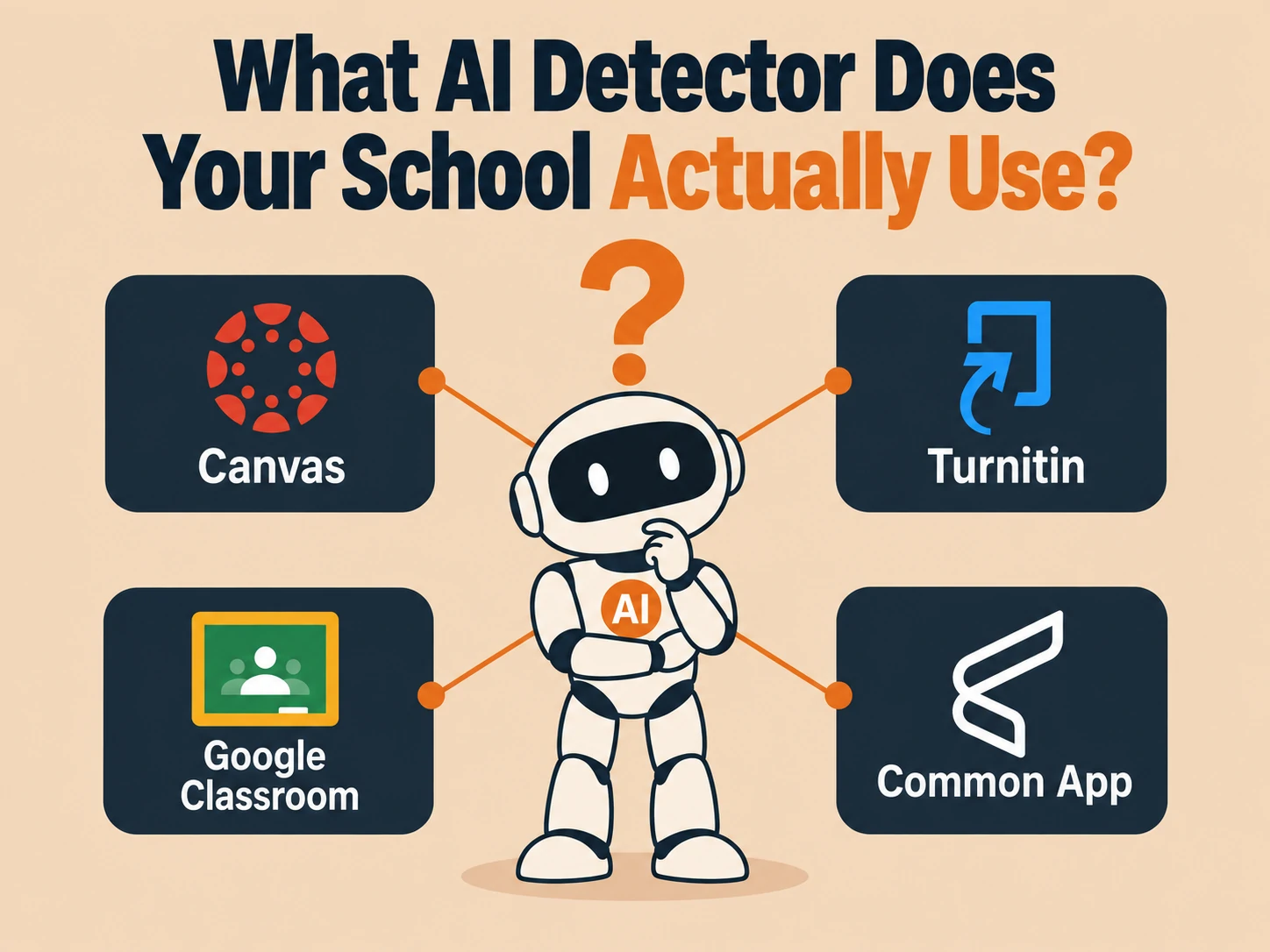
Most schools don’t run one single AI detector. Canvas, Google Classroom, and Brightspace have no detector built in at all, they connect a separate third-party tool, usually Turnitin, Copyleaks, or GPTZero. The Common App uses no detector software at all and relies on a signed certification instead. College Board doesn’t publicly name what it uses. Which one applies to you depends entirely on which platform flagged your work.
That distinction matters more than it sounds. A student who gets an assignment back flagged for AI use, with feedback that just says “AI detected” and no tool name, is left guessing at exactly the moment they need a straight answer. Knowing which of these systems your school actually runs changes what you should do next, and whether the flag is even worth trusting in the first place.
The Three Systems Schools Actually Use
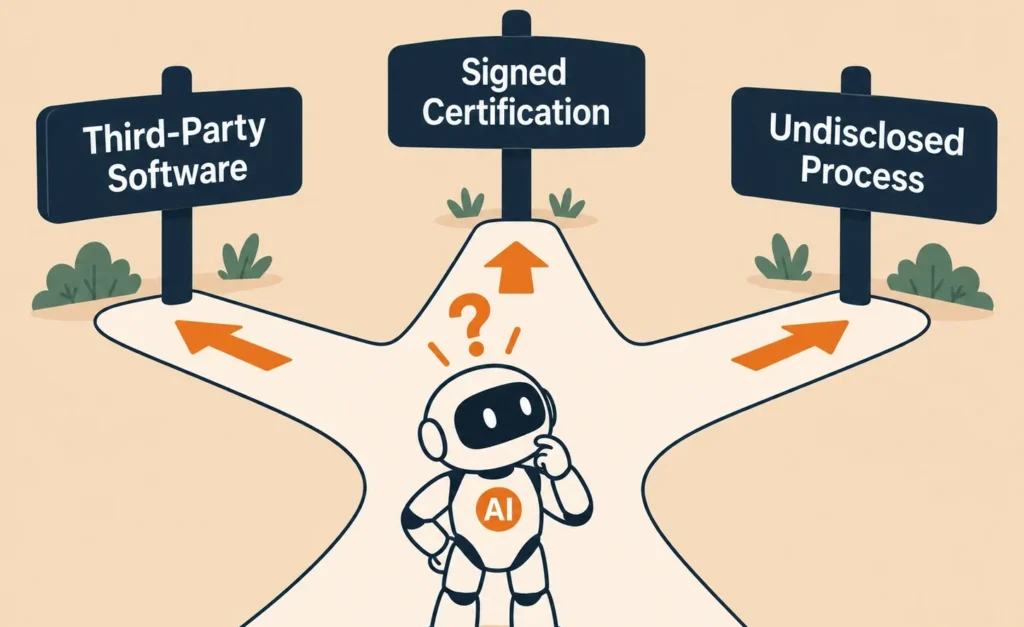
Almost every platform students ask about falls into one of three setups, and knowing which one applies to you matters more than knowing a specific brand name.
- Third-party software integration. The platform itself has no detector. A school licenses a separate tool, usually Turnitin, Copyleaks, or GPTZero, and plugs it into assignments.
- Certification instead of software. No detector runs at all. Instead, you sign a statement agreeing not to submit AI-generated work, and violating it is treated as fraud, not a failed scan.
- Undisclosed internal process. The organization says it checks for AI use without naming what it uses, and reserves the right to investigate further if something looks off.
What Each Platform Actually Uses
| Platform | What actually runs | How it works |
|---|---|---|
| Canvas | No native detector | Schools connect Turnitin, Copyleaks, GPTZero, Unicheck, or SafeAssign separately |
| Google Classroom | No native detector | Same third-party tools connect in, chosen by the school, not Google |
| Google Docs | Nothing built in | No scanning happens automatically. Version history shows editing patterns, and third-party browser extensions can be added, but Google itself does not flag anything |
| Brightspace / D2L | No native detector | Turnitin is the most common integration; Copyleaks is now natively embedded in Brightspace Assignments directly |
| Common App | No detector software | You sign a fraud certification naming AI-generated content as misrepresentation. Individual colleges may run their own checks after submission |
| College Board / AP exams | Not publicly named | College Board states it uses “various methods and services” without naming a vendor, and can request your interim work for review |
| Colleges generally | No universal standard | Turnitin is the most common single choice, but it is an institution-by-institution decision |
The pattern worth noticing: nearly every platform that does use software leans on the same small handful of vendors. That means the question that actually matters next isn’t which brand your school picked, it’s how much any of them can be trusted.
How Much Should You Trust the Result?
A 2026 peer-reviewed study out of Vrije Universiteit Brussel tested Turnitin, Copyleaks, GPTZero, and a newer tool called Pangram on the same 160 academic papers, split evenly between fully human-written, fully AI-generated, hybrid, and humanized AI text.
| Detector | Fully AI-generated | Humanized AI | False positives on human writing |
|---|---|---|---|
| Turnitin | 0% | 52.5% | 0% |
| Copyleaks | 0% | 25% | 0% |
| GPTZero | 0% | 2.5% | small positive bias |
| Pangram | 97.5% | 95% | 0% |
Three of the four most common tools caught almost none of the fully AI-generated papers in that specific test. Turnitin has been unusually transparent about its own limits too. Its Chief Product Officer has published that the tool’s document-level false positive rate is under 1 percent, but its sentence-level rate, the part that actually gets highlighted as evidence, runs closer to 4 percent, meaning roughly 1 in 25 flagged sentences was written by a real person.
None of this means a flag is meaningless. It means a single detector score is one weak signal, not proof, which is exactly what schools using these tools often fail to communicate to students.
Watch Out for Fake Turnitin Websites
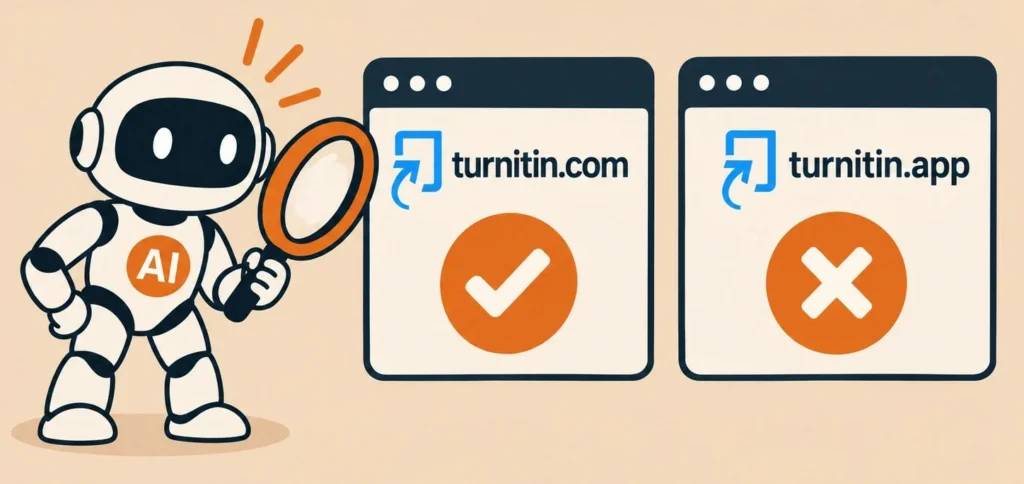
Searching for information about Turnitin’s AI detector surfaces something worth knowing on its own: several of the top-ranking results for that exact question are not affiliated with Turnitin at all. Domains like turnitin.app and turnitindetector.com have built real search visibility by using Turnitin’s name, despite having no connection to the company. If you land on a site offering to “check your Turnitin score” or “bypass Turnitin AI detection” that isn’t turnitin.com itself, treat it the same way you would treat any lookalike domain: assume it is not official, and do not upload real coursework to it.
This same inconsistency isn’t unique to the classroom either. The same detectors disagree just as wildly when they’re run on job resumes, one real test got four different verdicts from four different tools on the same document.
If You’re Not Sure Which System Applies to You
- Ask your instructor directly which tool is enabled on the assignment. Most are willing to say.
- Check your assignment feedback for a named tool logo or report format, Turnitin’s AI Writing Report looks different from Copyleaks’ output.
- If the platform is Common App or College Board, remember there is no single tool to identify. The relevant risk is the certification you signed, not a software scan.
Frequently Asked Questions
What AI detector does Canvas use?
Canvas has no built-in AI detector. Schools connect a separate tool, most commonly Turnitin, Copyleaks, or GPTZero, and the choice is made by the institution, not by Canvas itself.
Does Google Classroom have an AI detector?
No. Google Classroom has no native AI detection. Any flag comes from a third-party tool a school has connected separately, typically the same vendors used in Canvas.
What AI detector does Turnitin use?
This question reflects a common misunderstanding. Turnitin does not license someone else’s AI detector, it built its own proprietary model in-house, which is why its results look different from Copyleaks or GPTZero.
Does Google Docs have an AI detector?
No, not natively. Google Docs does not scan or flag content automatically. Version history can show whether a document was drafted gradually or pasted in all at once, and third-party browser extensions exist, but nothing is built into Docs itself.
What AI detector does the Common App use?
None. The Common App does not run AI detection software. Applicants instead sign a fraud certification that names AI-generated content as a form of misrepresentation, and individual colleges may apply their own checks after the application is submitted.
Does College Board check AP exams and essays for AI?
Yes, but it does not name a specific tool. College Board states it uses “various methods and services” to detect AI use and reserves the right to request a student’s interim work for review, with a failing score for that component as a possible consequence.
What AI detector do most colleges use?
There is no universal standard. Turnitin is the most commonly licensed tool among colleges generally, but the decision is made institution by institution, and some schools use no dedicated software at all.
Is turnitin.app or turnitindetector.com actually Turnitin?
No. Those are unaffiliated domains that use Turnitin’s name in their branding despite having no connection to the company. The official site is turnitin.com.