Is Claude Watermark Permanent? Anthropic’s Response
Anthropic says the Claude watermark survives light edits but not a full rewrite, which many assume is impossible to remove.

In this article
Anthropic’s Claude watermark did not land quietly. Within days of the announcement, Claude users pushed back hard on Reddit. One user in r/artificial put it bluntly: “Who will get caught? You. The student who used Claude to reorganize a paragraph.” Another warned that anyone flagged would come out of the process “with a digital tattoo on their forehead.” Lawyers and academics raised sharper questions about what the mark could actually prove. Much of that reaction ran ahead of what Anthropic actually said.
What Anthropic Actually Announced
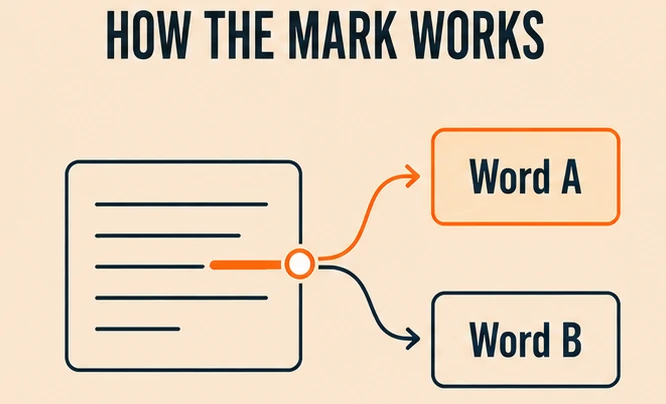
Anthropic switched on invisible watermarking for Claude on August 2, 2026. The system nudges Claude toward certain word choices among options that mean the same thing. Readers cannot see a difference, but the pattern shows up under the right key.
Anthropic did not design this detection method from scratch. It adapted an existing watermarking technique built for exactly this kind of task, then applied it across Claude’s models. Anthropic’s own announcement says the watermark carries no real cost to writing quality, and internal testing found no drop in output.
What The Announcement Confirms
Anthropic’s own page settles a few points directly.
- Translations do carry the watermark, since Claude still chooses every word in the translated version.
- The rollout applies worldwide, not just inside the European Union.
- Signing the EU Code of Practice on Transparency of AI-Generated Content was voluntary. The broader disclosure duty under the AI Act’s Article 50 is not voluntary, but the specific code Anthropic joined is a separate, optional path to proving compliance.
These three points are settled, straight from the source.
Where Common Assumptions Miss The Mark
The Watermark Is Not Permanent, But Removing It Is Not Simple Either
Anthropic’s own page draws a clear line here. Light editing will likely leave the watermark intact. A complete rewrite, where every single word gets replaced, removes it.
That second option is not exactly practical advice, though. Rewriting an entire piece of text word for word defeats the reason most people open Claude in the first place. Someone who retypes a whole draft by hand has not saved any of the time Claude was meant to save them.
In practice, most real Claude use will likely still carry a detectable mark. That includes drafting, editing, and summarizing. Almost nobody rewrites finished AI output entirely just to strip a signal they cannot even see.
The Detection Tool Is Not A Simple Yes Or No
Some assume the coming detection tool will confirm, plainly, whether someone used AI. Anthropic describes something narrower. The detector returns a likelihood, not a verdict, and it works less reliably on short passages or plain factual text.
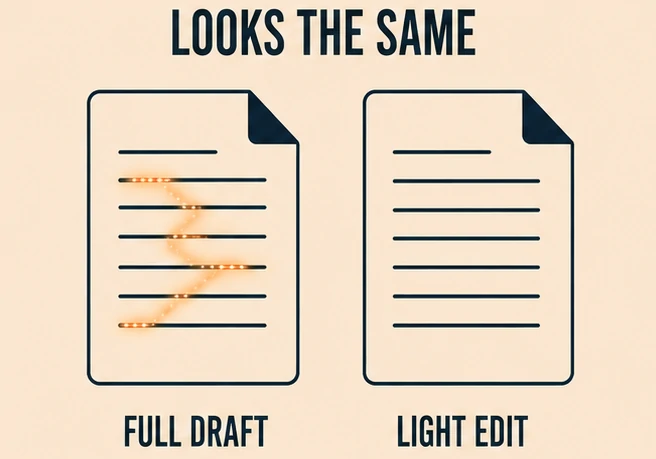
More importantly, the tool cannot tell a full draft written by Claude apart from a paragraph a person wrote themselves, then asked Claude to proofread. Both can trigger the same mark. A watermark only shows Claude was likely involved at some point, not how much it did.
The Rollout Timeline For Older Models Stays Vague
Anthropic says only that watermarking on older Claude models will roll out “over the coming months,” without naming a specific month. Some reporting has attached a firm December deadline to that rollout. Anthropic’s own wording does not support that level of precision yet.
What Actually Matters Here
Getting individual details right or wrong is not the real story. The real story is what happens once a school, a law firm, or an employer treats a probability signal like a confession.
Forbes summed up the core problem well. The watermark proves Claude touched a piece of writing. It cannot show who had the idea, who wrote the first draft, or whether any rule got broken. A teacher who reads that mark as proof of full AI authorship is reading more into it than the technology supports.
This is not a new failure mode either. A 2023 Stanford study tested seven earlier AI detectors on writing from non-native English speakers. The detectors falsely flagged those writers as AI generated 61 percent of the time. Detection tools built for a different purpose have already punished certain writers more than others.
Open Dialogue Foundation raised a related concern too. A detected watermark could cast doubt on translated reports from activists and researchers, even when a human wrote every idea and only used Claude to translate it.
Anthropic has leaned into public transparency before. Its researchers once mapped 171 distinct emotional patterns inside Claude, a level of detail few AI labs share about their own models. This is not Anthropic’s only major disclosure this month either. Days earlier, the company detailed a separate testing incident involving Claude models.
Where Users Can Go From Here

None of this means Claude stopped being useful. It means people should know what to expect before they hit publish, submit, or send.
- Treat any text Claude touches, even a light edit, as likely to carry the mark. That is the realistic default, not the exception.
- Follow whatever your school or employer’s actual AI policy says. The policy applies whether or not the mark ever gets checked.
- If Claude only helped with proofreading or translation, be ready to explain that plainly. A detected mark cannot show how much Claude contributed on its own.
- Read any result from Anthropic’s detection tool as a likelihood, not a verdict, once that tool becomes available.
- Watch Anthropic’s own announcements for the exact date older Claude models receive the watermark, since the company has not confirmed one yet.
Anthropic has been direct about what its own system can and cannot prove. Reading that explanation carefully is the simplest way to keep using Claude with fewer surprises later.
Frequently Asked Questions
Is Anthropic’s Claude watermark actually permanent?
No. Anthropic says light editing usually leaves the watermark intact, but a complete rewrite where every word changes removes it.
Can the Claude AI watermark be removed?
Technically yes, through a full rewrite of the text. In practice, this is not a real workaround, since rewriting everything by hand removes the entire time saving reason to use Claude in the first place.
Does Claude’s watermark apply to translations?
Yes. Since Claude still selects every word during translation, the watermark carries over into the translated version the same way it does in original writing.
Will older Claude models get watermarked too?
Anthropic says yes, but only commits to a rollout “over the coming months” for models released before August 2, 2026. It does not name a specific month like December.
Can Anthropic’s detection tool prove someone used AI to write an essay?
No. The tool returns a likelihood that Claude was involved, not a confirmed verdict. It cannot tell a full AI draft apart from a human draft that only received light AI editing.
Was Anthropic required to sign the EU Code of Practice?
No. Signing the Code of Practice on Transparency of AI-Generated Content was voluntary. The separate disclosure duty under the AI Act’s Article 50 already applies regardless of who signs the code.
Why did Anthropic apply the watermark worldwide instead of just in the EU?
Anthropic says it lacks a reliable way to limit the feature by region yet. Rather than a deliberate global policy choice, the company frames it as a current technical limitation.
Should I stop using Claude if my school or job has a zero AI policy?
That depends on the policy itself, not on the watermark. The mark cannot decide whether a rule was broken, and it does not show how much Claude was involved. Follow your institution’s actual policy, and ask directly if you are unsure.
Every number, date and quote in this article links to its source. Spotted a mistake? Tell us and we will correct it with a dated note. Read our editorial policy.