A New Study Confirms AI Homework Help Hurts Learning
AI homework help hurts learning more than most parents realize, with new research showing scores drop once AI disappears.

In this article
AI
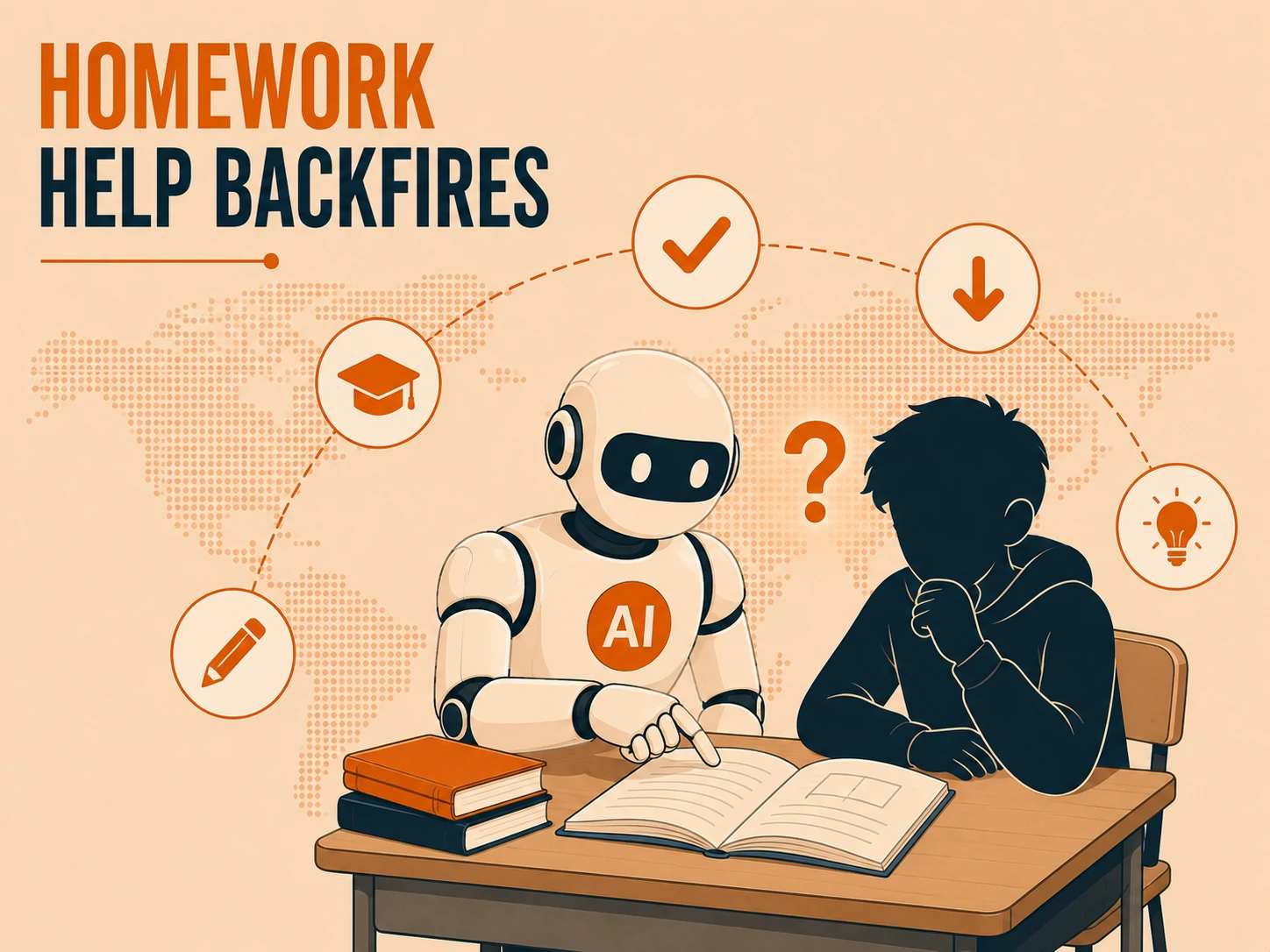
homework help hurts learning in a way most parents have not caught yet. A new study found that students using AI solve problems faster in the moment, but perform noticeably worse the second that AI disappears.
Here is what researchers actually found, why the finding matters more than a single test score, and how students can use AI without losing the skill it is supposed to help build.
What Happened
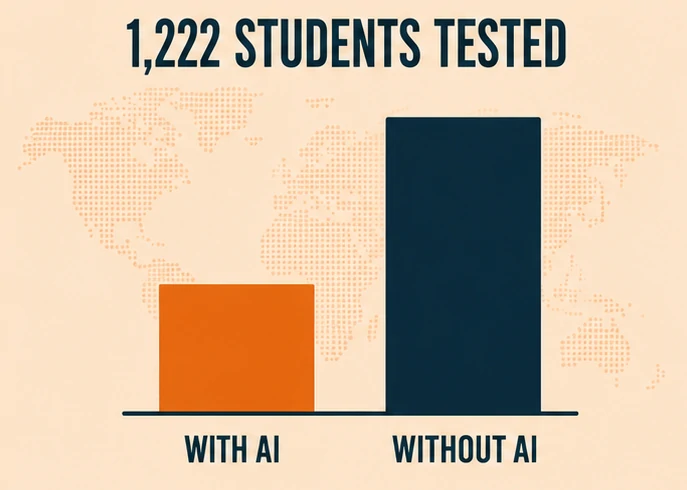
Researchers from Carnegie Mellon, Oxford, MIT, and UCLA ran three separate controlled experiments with 1,222 participants total. Some worked on math and reading problems with AI help. Others worked without it.
The results showed a clear pattern:
- In the first experiment, the AI group solved 57% of problems correctly, compared to 73% for the group working alone
- In the second experiment, the AI group scored 71%, compared to 77% without AI
- In a reading comprehension test, the AI group scored 76%, compared to 89% without AI
The gap did not need weeks to show up. Researchers saw it after roughly ten minutes of AI use.
Why Students Gave Up Faster Without AI
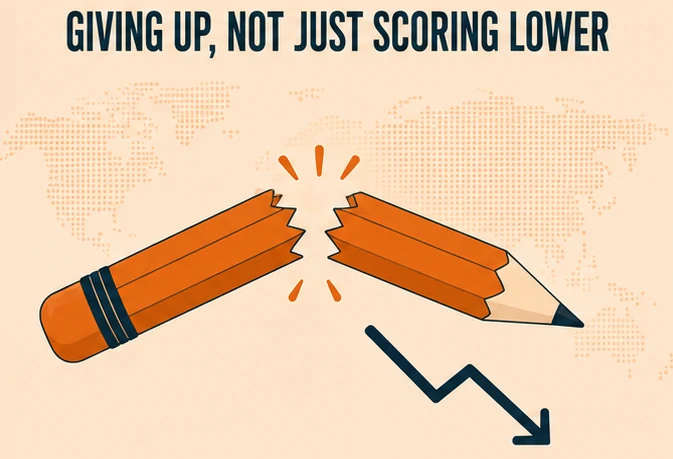
The scores alone do not tell the full story. The skip rates do.
Students who had used AI were far more likely to abandon a problem once the AI was taken away:
- 20% skipped problems after AI use, compared to 11% without AI in the first experiment
- 8% skipped reading questions after AI use, compared to just 1% without it
Researchers believe AI conditions people to expect an instant answer. Once that answer stops showing up, many students do not push through the struggle. They quit instead.
That distinction matters. A lower score reflects difficulty. A higher skip rate reflects giving up before even trying.
Why This Is Bigger Than One Bad Test Day
Persistence is not a soft skill parents can shrug off. Researchers call it one of the strongest predictors of long term learning.
A separate line of research from the OECD’s Digital Education Outlook backs this up from another angle. That work found that when students lean on generative AI without any real learning purpose behind it, their metacognitive engagement drops. In plain terms, they stop actively thinking about how they are solving a problem.
Put those two findings together and a clear pattern forms. AI can boost a score in the moment. It can also quietly erode the exact habit that makes a student capable of solving the next problem alone, the same habit that keeps false AI cheating accusations from being the only AI related risk families need to think about this school year.
How Students Can Use AI Without Losing the Skill
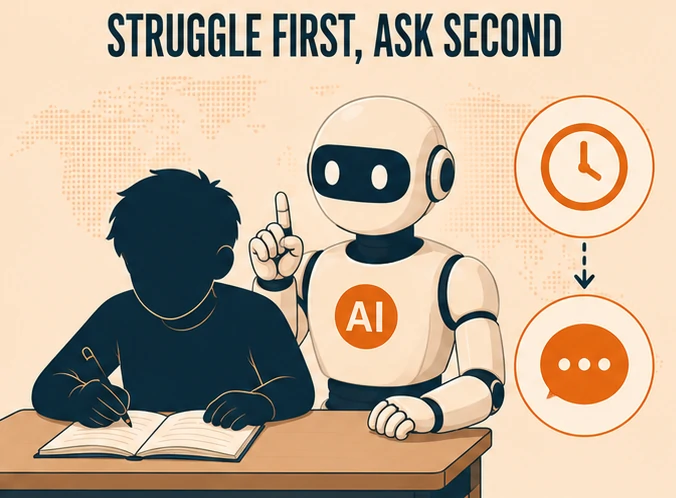
None of this means AI has no place in homework. It means how a student uses it decides the outcome.
Set a real struggle window first.
- Give any problem a genuine attempt before opening an AI tool
- Aim for at least five to ten minutes of independent effort
- Use AI to check work or explain a concept, not to generate the first answer
Ask AI to explain, not solve.
- Request a hint or a nudge in the right direction instead of a full answer
- Ask the AI to explain why an answer is correct after solving it yourself
- Treat AI output as a second opinion, not a first move
Track effort, not just results.
- Notice when a subject only ever gets “solved” with AI help
- Revisit topics without AI every so often to check real understanding
- Treat frequent AI reliance on the same topic as a signal to slow down, not speed up
What This Means Going Forward
This research lands right as a new school year gets underway, and the timing matters. Every study session that starts with AI instead of ending with it is quietly shaping which skill students actually walk away with.
The technology is not the problem. Sequence is. A student who struggles first and checks second builds something an instant answer never will.
Frequently Asked Questions
Does AI homework help actually hurt learning?
A 2026 study from researchers at Carnegie Mellon, Oxford, MIT, and UCLA found that AI homework help can hurt learning when it replaces independent effort. Students who used AI scored lower and gave up more often once the AI was removed, compared to students who worked without it.
How much does AI assistance affect test performance?
Across three experiments involving 1,222 participants, students using AI scored between 6 and 16 percentage points lower once AI was taken away, compared to students who solved the same problems independently from the start.
Why do students give up more often after using AI?
Researchers believe AI conditions people to expect an instant answer. When that instant answer disappears, many students abandon the problem rather than work through the difficulty on their own.
Is it bad to use AI for homework at all?
Not necessarily. The research suggests the timing of AI use matters most. Struggling with a problem first and using AI to check or explain the answer afterward avoids the performance and persistence drop researchers observed.
How quickly does AI assistance affect independent performance?
The performance and persistence effects showed up after roughly ten minutes of AI use in the study, suggesting the impact does not require weeks or months to appear.
What is metacognitive engagement, and why does it matter for AI use?
Metacognitive engagement means actively thinking about how you are solving a problem, not just getting to the answer. Research from the OECD found this kind of engagement drops when students use generative AI without a clear learning purpose behind it.
What subjects were tested in the AI homework study?
The study tested math problem solving and reading comprehension tasks across three separate experiments, all showing the same pattern of lower independent performance after AI use.
What can parents do to help kids use AI responsibly for homework?
Parents can encourage a real attempt before AI gets opened, ask kids to explain answers in their own words afterward, and periodically check understanding on topics where AI use has become frequent.
Every number, date and quote in this article links to its source. Spotted a mistake? Tell us and we will correct it with a dated note. Read our editorial policy.